


In off-road racing and adventure challenges, speed is only half the battle. The other, equally critical half, is navigation. Events like rally raids, desert races, and even local UTV scavenger hunts are won and lost not just by the horsepower under the hood, but by the precision and strategy of the team’s navigator. Off-road navigation competition tips are the specialized knowledge that separates the lost from the leaders.
The challenge of competitive navigation is unique: you must process complex information (maps, roadbooks, GPS data) while moving at high speed over unpredictable terrain. It requires a calm mind, meticulous preparation, and seamless communication between the driver and the navigator.
I’ve seen teams with the fastest vehicles lose hours because of a single navigational error. I’ve also seen slower, more methodical teams win by simply being the only ones who found all the checkpoints. This guide will equip you with the essential off-road navigation competition tips to transform your UTV into a precision instrument and your team into a well-oiled machine.
Phase 1: Pre-Race Preparation—The Mental Map
The race is often won before the engine even starts. Pre-running and meticulous preparation of your navigational tools are non-negotiable.
1. Understanding the Tools of the Trade
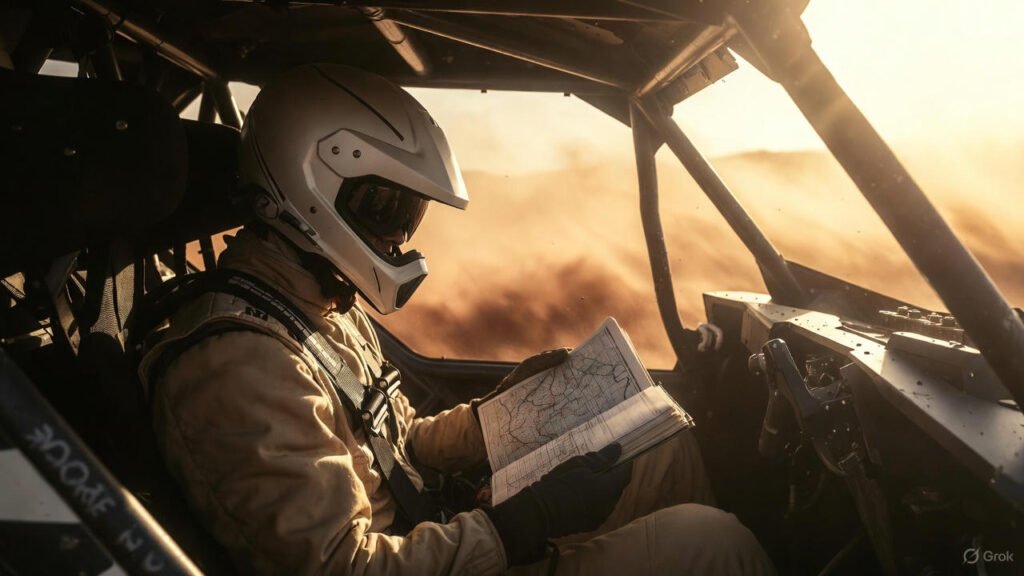
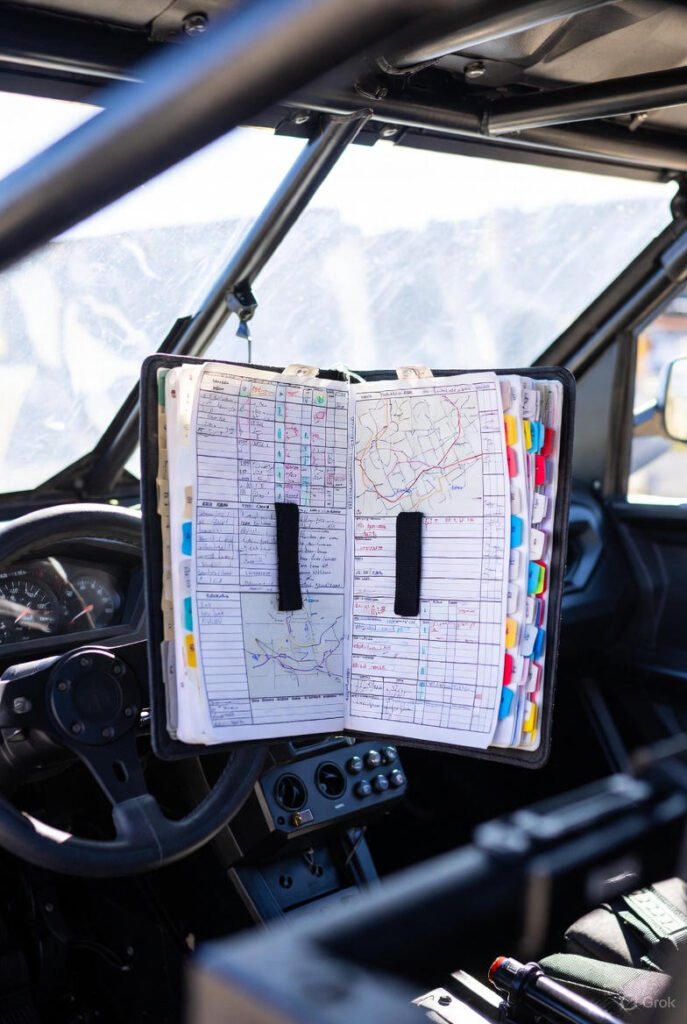
- Roadbooks: In rally-style events, the roadbook is your bible. It’s a scroll of paper detailing every turn, hazard, and checkpoint (waypoint) using standardized symbols and distances (odometer readings). You must be fluent in reading these symbols [1].
- GPS Strategy: Even in “no-GPS” events, a GPS is often used for tracking and safety. In events that allow it, use a rugged, large-screen GPS pre-loaded with the course. The key is to use the GPS to confirm your position, not to blindly follow a line.
- Maps and Compass: For adventure racing and orienteering-style events, a topographic map and a compass are the primary tools. Practice orienteering techniques to quickly translate terrain features on the map to the ground in front of you.
2. The Navigator’s Mark-Up
- Highlighting Key Data: Before the race, mark up your roadbook or map. Highlight critical distances, major turns, and dangerous hazards.
- Avoid Over-Marking: As rally experts advise, too much information can be as bad as too little [2]. Only mark what is essential for quick, in-the-moment decision-making.
| Navigational Tool | Primary Use | Competition Tip |
|---|---|---|
| Roadbook | Sequential turn-by-turn directions and hazards. | Pre-mark critical distances and hazards; practice reading at speed. |
| GPS | Confirming location, tracking, and emergency waypoints. | Use as a secondary check; do not rely on it as the primary guide. |
| Odometer | Measuring distance between roadbook instructions. | Calibrate precisely before the race; use a dedicated, resettable unit. |
| Compass | Determining bearing and direction in open terrain. | Practice taking bearings quickly and accurately. |
Phase 2: Execution—Driver-Navigator Synergy
The relationship between the driver and navigator is the single most important factor in a successful run. It requires trust, clear communication, and a shared strategy.
1. The Co-Driver’s Call
- Clear and Concise: Calls must be delivered clearly, calmly, and with enough advance warning for the driver to react. A call like “Hard right in 200 meters, watch for the ditch!” is far better than “Turn right now!”
- Timing is Everything: The navigator must anticipate the driver’s needs. For high-speed sections, calls can be made further in advance. For technical sections, they need to be more immediate and precise.
2. Driver’s Role
- Trust the Navigator: The driver must trust the navigator implicitly. Hesitation based on doubt is a recipe for disaster.
- Maintain the Odometer: The driver is responsible for maintaining a consistent speed and resetting the odometer at the correct points as instructed by the navigator.
Phase 3: Strategic Pacing and Risk Management
Competitive navigation is not just about finding the way; it’s about finding the fastest way without making a mistake.
1. The Route Choice Dilemma
- Balancing Risk and Reward: In events where route choice is allowed, the navigator must quickly assess the map and choose between a longer, safer route or a shorter, more technical route. The shorter route saves time but increases the risk of getting stuck or damaging the vehicle.
- The “Finish in Mind” Strategy: Always plan your route with the finish line in mind, especially in multi-day events. Prioritize routes that conserve fuel and minimize wear on the vehicle when possible [3].
2. Checkpoint Strategy
- Proof of Passage: In many competitions, you must prove you reached a checkpoint, often by physically marking a card or taking a photo. Ensure the navigator has a clear, defined plan for approaching the checkpoint to minimize stop time.
- Scavenger Hunt Tactics: For events like UTV scavenger hunts, the navigator must prioritize the checkpoints that are easiest to find or offer the highest point value, optimizing the route to hit the maximum number of targets efficiently.
Phase 4: Troubleshooting and Recovery
Even the best navigators make mistakes. The ability to recover quickly is a hallmark of a winning team.
1. When You Get Lost
- Stop and Assess: The moment you realize you are lost, stop the vehicle. Continuing to drive while lost only compounds the error.
- Backtrack to the Last Known Point: Use your GPS or map to identify the last confirmed waypoint or instruction. Backtrack to that point and re-read the instructions from there.
2. Odometer Failure
- Manual Measurement: If your primary odometer fails, the navigator must be ready to use a secondary odometer or even a simple stopwatch and average speed calculation to estimate distances until a repair can be made.
Conclusion: The Ultimate Mental Challenge
Mastering off-road navigation competition tips is the ultimate mental challenge in the off-road world. It requires a blend of technical skill, strategic thinking, and the ability to perform under extreme pressure. By focusing on pre-race preparation, establishing clear driver-navigator communication, and employing smart strategic pacing, you can transform your UTV team from a pair of trail riders into a formidable competitive force.
The terrain may be rough, but with a sharp mind and a well-marked roadbook, the path to victory is clear.
See you at the next waypoint!
References
[1] Dinaric Rally – Rally Raid Roadbook Navigation Explained
[2] Cross Country ADV – Roadbook Navigation Explained: Read and Ride
[3] WLDNCO – Navigation for Adventure Racing 101 + 201
[4] Don Barrow – Rally Navigation Beginners Info | Complete Guide
[5] Car and Driver – What It Takes to Create a No-GPS Off-Road Rally