

For the dedicated off-road enthusiast, fuel efficiency is often a secondary concern to raw power and capability. 💨
However, as technology advances, manufacturers are proving that riders can have the best of both worlds. The ATV fuel-efficiency tech 2025 landscape is defined by a convergence of intelligent engine management, drivetrain optimization, and material science. 💡
These innovations are not just about saving money at the pump; they are about extending your range, reducing your environmental footprint, and enhancing the overall riding experience. 🌍
This comprehensive guide will explore the three pillars of modern ATV fuel economy, detailing how cutting-edge systems are squeezing every last mile out of a tank of gas. ⛽
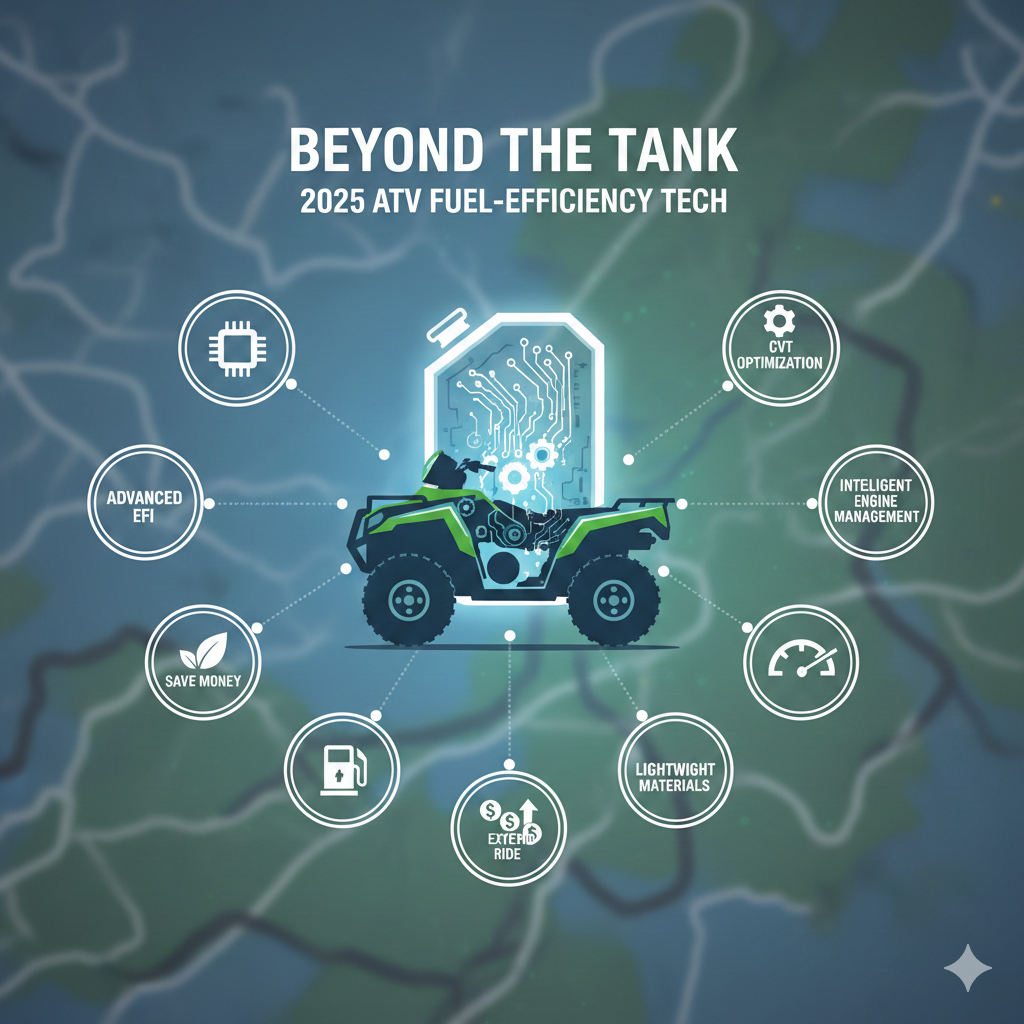
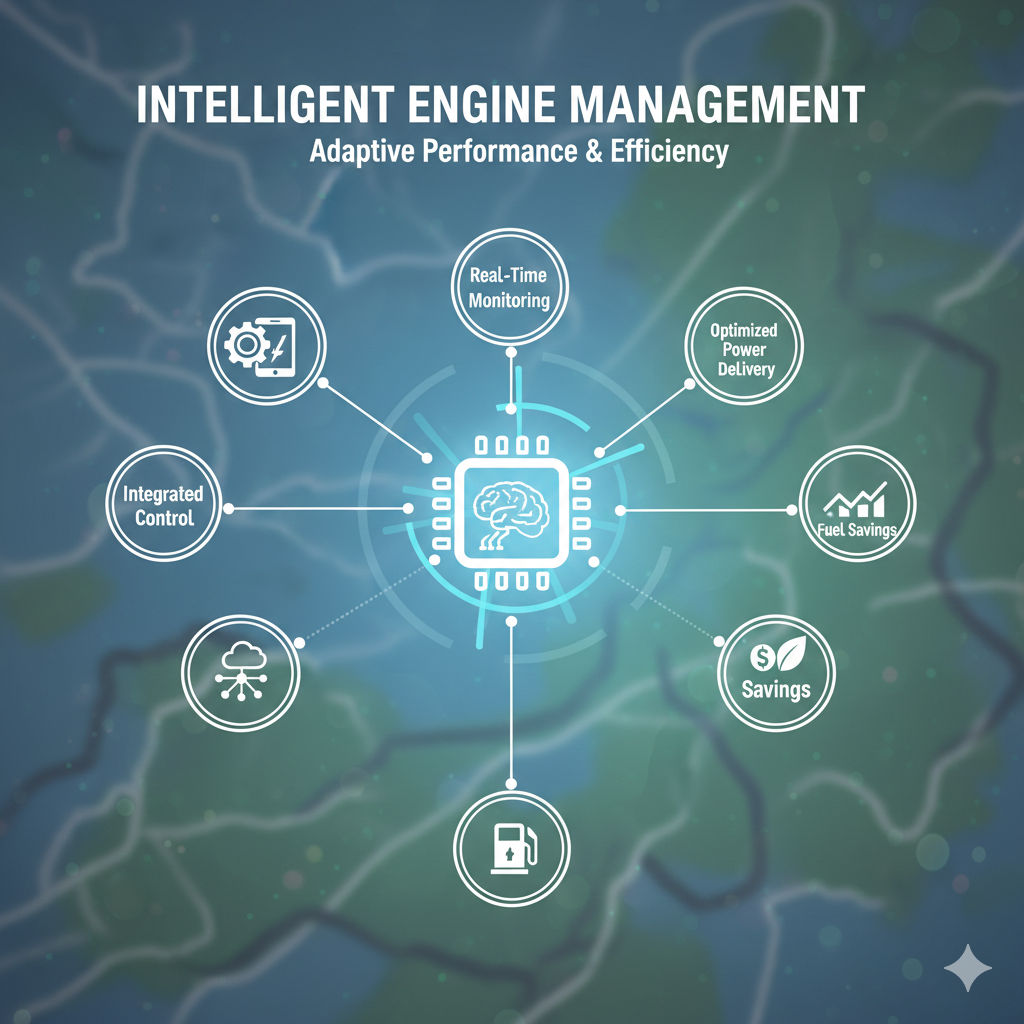
Pillar 1: Intelligent Engine Management
The days of simple carburetors are long gone. Modern ATVs rely on sophisticated Electronic Control Units (ECUs) and advanced fuel delivery systems to manage performance and efficiency. 🧠
Advanced Electronic Fuel Injection (EFI)
Electronic Fuel Injection has been a game-changer for ATVs, replacing the less precise carburetor. 🔄
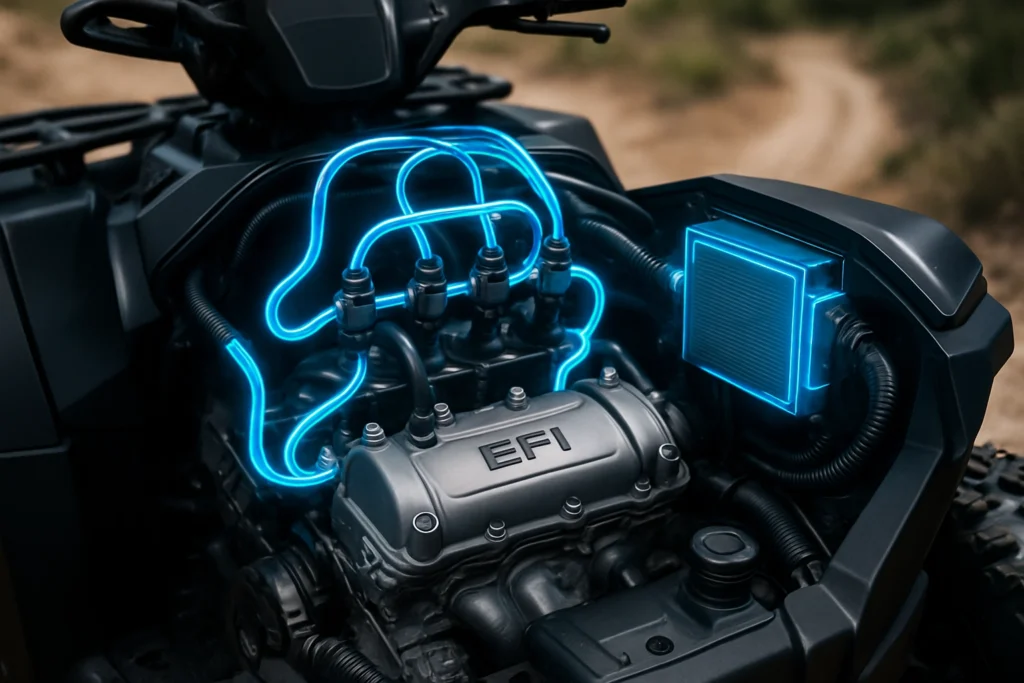
In 2025, EFI systems are more advanced than ever, using multiple sensors (oxygen, temperature, throttle position) to calculate the perfect air-fuel mixture in real-time. Electronic Fuel Injection Offers ATV Advantages by providing a precise, atomized spray of fuel directly into the intake manifold. 💨
This precision is the key to efficiency, ensuring complete combustion and minimizing wasted fuel. 💥
Intelligent Throttle Control (iTC) and ECO Modes
Manufacturers like Can-Am have introduced systems like Intelligent Throttle Control (iTC) with selectable riding modes, such as “ECO” mode. 🚦
The iTC system is a ride-by-wire technology that allows the ECU to interpret the rider’s throttle input and adjust the engine’s response accordingly. What are the different Driving Modes? In ECO mode, the system deliberately smooths and softens the throttle response. 🐢
This prevents sudden, unnecessary bursts of acceleration that waste fuel, keeping the engine operating in its most efficient RPM range. 📈
Example –
“The most efficient engine is the one that only uses the power it needs.”
Pillar 2: Optimized Drivetrain
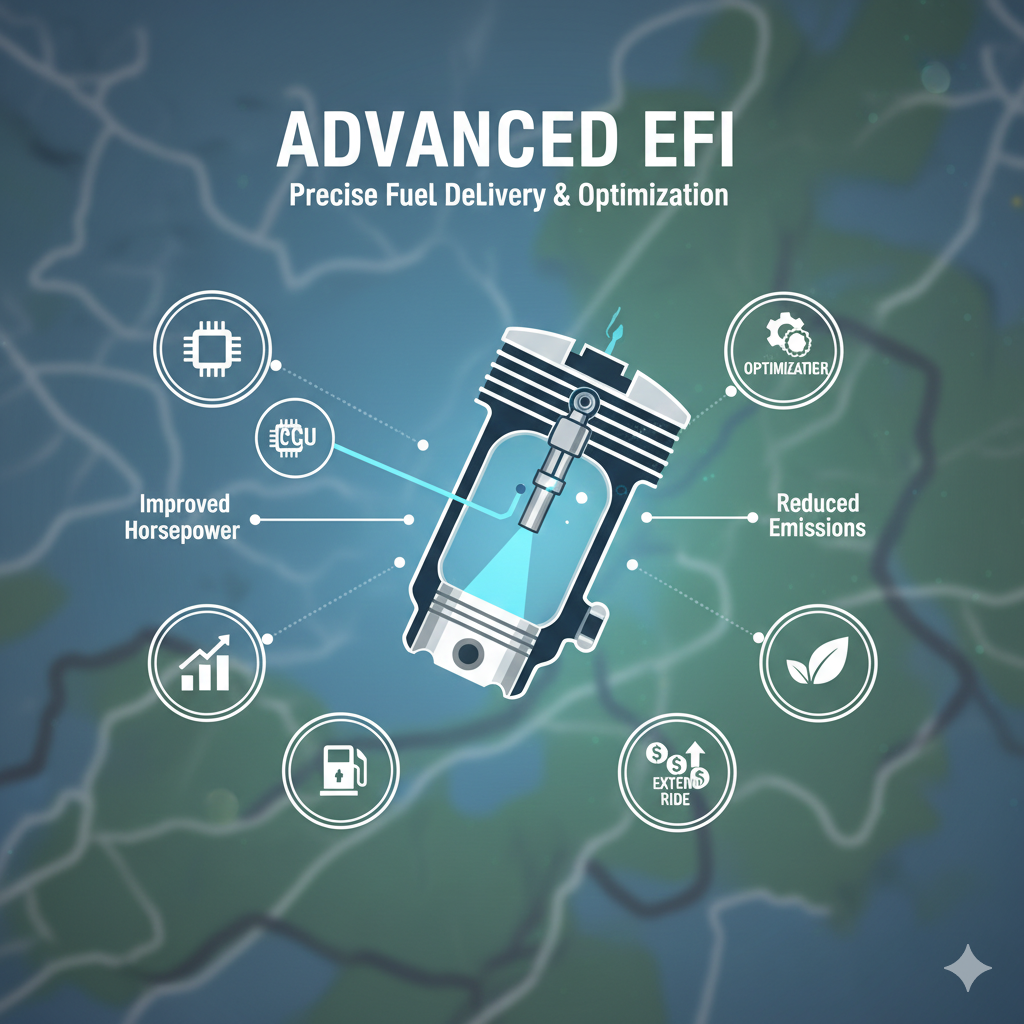
The Continuously Variable Transmission (CVT) is the dominant transmission type in utility and recreational ATVs, and its optimization is critical for fuel economy. ⚙️
CVT Tuning for Efficiency
A CVT works by constantly adjusting the gear ratio to keep the engine operating at its most efficient speed, regardless of the vehicle’s speed. 🔄
Modern CVT tuning focuses on widening the “sweet spot” of the engine’s torque curve, allowing the transmission to shift earlier and hold a lower RPM for cruising. Design and Optimization of Continuous Variable Transmission research shows that this can provide better fuel economy than traditional geared systems. 📉
Intelligent Engine Braking (iEB)
Some systems, like Can-Am’s Intelligent Engine Braking (iEB), are integrated with the CVT to manage deceleration. 🛑
By controlling the clutch engagement during coasting, the system can reduce unnecessary engine drag, which can be a source of wasted energy and fuel consumption. 💨
Pillar 3: Lightweight Construction
The simplest way to improve fuel efficiency is to reduce the amount of mass the engine has to move. ⚖️
The trend toward lightweight materials is accelerating in the 2025 ATV market. 🚀
Advanced Materials in Chassis and Components
Manufacturers are increasingly using advanced materials to shave off weight without sacrificing strength. 💪
- High-Strength, Low-Alloy (HSLA) Steel: Used in chassis construction, these steels are stronger than traditional steel, allowing for thinner, lighter frames. 🦴
- Aluminum Alloys: Widely used in suspension components, wheels, and engine parts, aluminum offers a significant weight reduction over steel. ⚙️
- Composites: Plastics and carbon fiber reinforced polymers are being used for body panels, fenders, and even some structural components, further reducing the overall vehicle mass. Lightweight Materials R&D Program highlights the role of these materials in improving fuel economy. 🍃
Example –
“Every pound saved is a mile gained.”
The Synergy of Efficiency
The true power of ATV fuel-efficiency tech 2025 lies in the synergy between these three pillars. 🤝
An intelligent EFI system works with an optimized CVT, which in turn benefits from a lightweight chassis. The result is a machine that delivers the power and performance riders demand while consuming significantly less fuel. 🏆
| Technology | Mechanism | Fuel Economy Impact |
|---|---|---|
| Advanced EFI | Precise, sensor-driven air-fuel mixture control. | Minimizes unburned fuel, up to 25% savings. |
| Intelligent Throttle Control (iTC) | Smoother, restricted throttle response in ECO mode. | Prevents wasteful, sudden acceleration. |
| Optimized CVT | Keeps engine at peak efficiency RPM for longer periods. | Maximizes engine efficiency across various speeds. |
| Lightweight Materials | Reduces overall vehicle mass (curb weight). | Less power required for acceleration and climbing. |
The 2025 model year is shaping up to be a landmark for efficiency, proving that performance and responsibility can coexist on the trail. Ride further, spend less, and explore more. 🏞️
References and Further Reading
For those who wish to delve deeper into the technical aspects of fuel efficiency, the following resources are highly recommended. 📚
- 2025 CFMOTO CFORCE 800 Touring – CFMOTO USA.
- 2025 Complete UTV Model Guide: Can-Am Off-Road – ATV.com.
- The Future of UTV & ATV Design: How New Technologies … – Progressive Automations.
- How Important Is Fuel Efficiency When Choosing an ATV? – Extreme Off-Road.
- Engine management systems – Bosch Mobility.
Happy trails! 🥳