Why Honda Dominates the Off-Road Vehicle Market in 2026
When enthusiasts search for the best Honda off road vehicle, they are tapping into a legacy of engineering excellence that spans decades. Honda has consistently delivered machines that balance raw trail-riding capability with the reliability and comfort that modern adventurers demand. Whether you are navigating rocky mountain passes, muddy forest trails, or desert washes, Honda’s lineup of side-by-sides, UTVs, and rugged SUVs offers something for every type of off-road explorer.
In 2026, the off-road vehicle market is more competitive than ever, yet Honda continues to lead with innovative suspension systems, advanced torque-vectoring differentials, and industry-leading durability standards. The brand’s commitment to quality means that Honda off-road vehicles consistently outlast competitors in long-term reliability studies, making them a smart investment for weekend warriors and hardcore trail riders alike.
From the trail-conquering Honda Pioneer 1000 series to the adventure-ready Honda Passport TrailSport SUV, this comprehensive guide breaks down every Honda off-road vehicle worth considering. We will examine performance specifications, real-world trail capabilities, essential accessories, and maintenance strategies that keep your machine running at peak performance for years to come.
Best Honda Off-Road Vehicles Ranked for 2026
Choosing the best Honda off road vehicle depends entirely on your intended use, terrain preferences, and passenger requirements. Below, we rank Honda’s top off-road machines based on capability, reliability, value, and overall trail performance.
Honda Pioneer 1000-5: The Ultimate Multi-Purpose Off-Road Machine
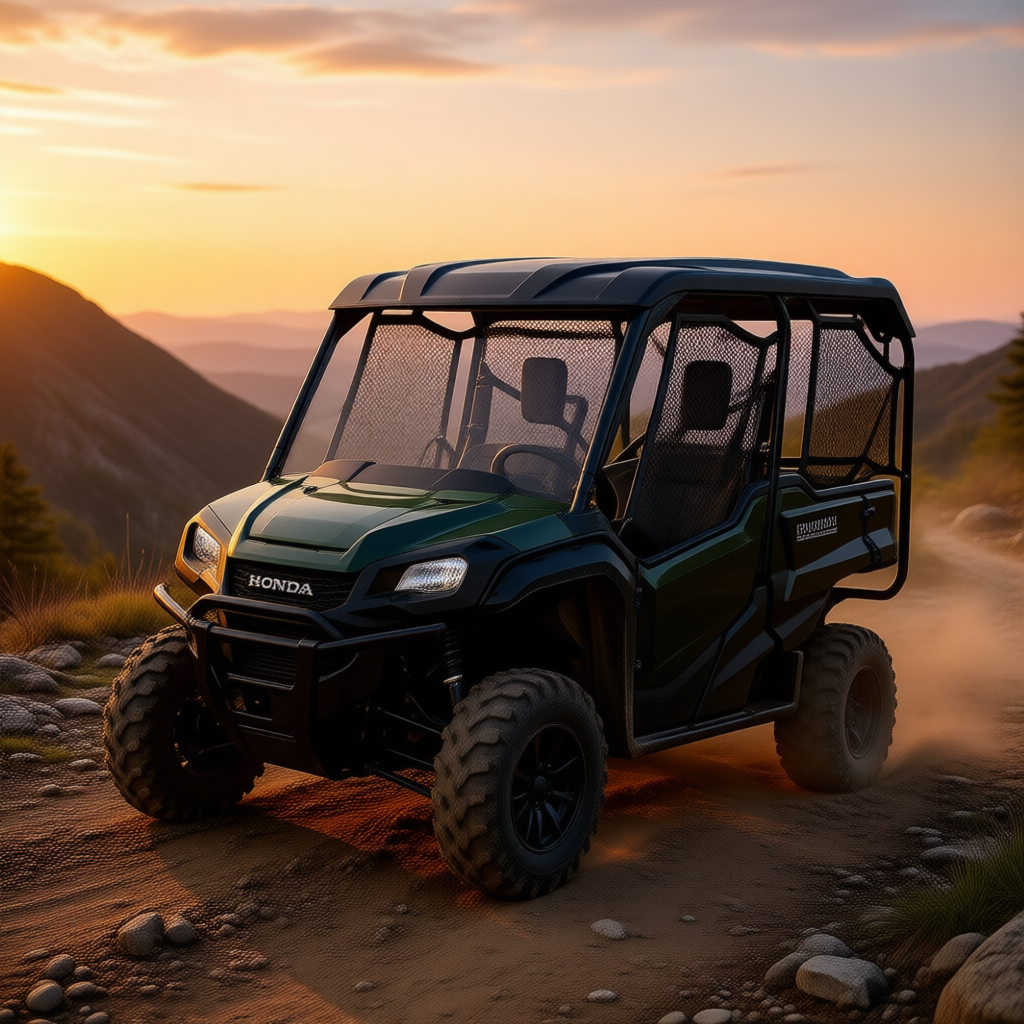
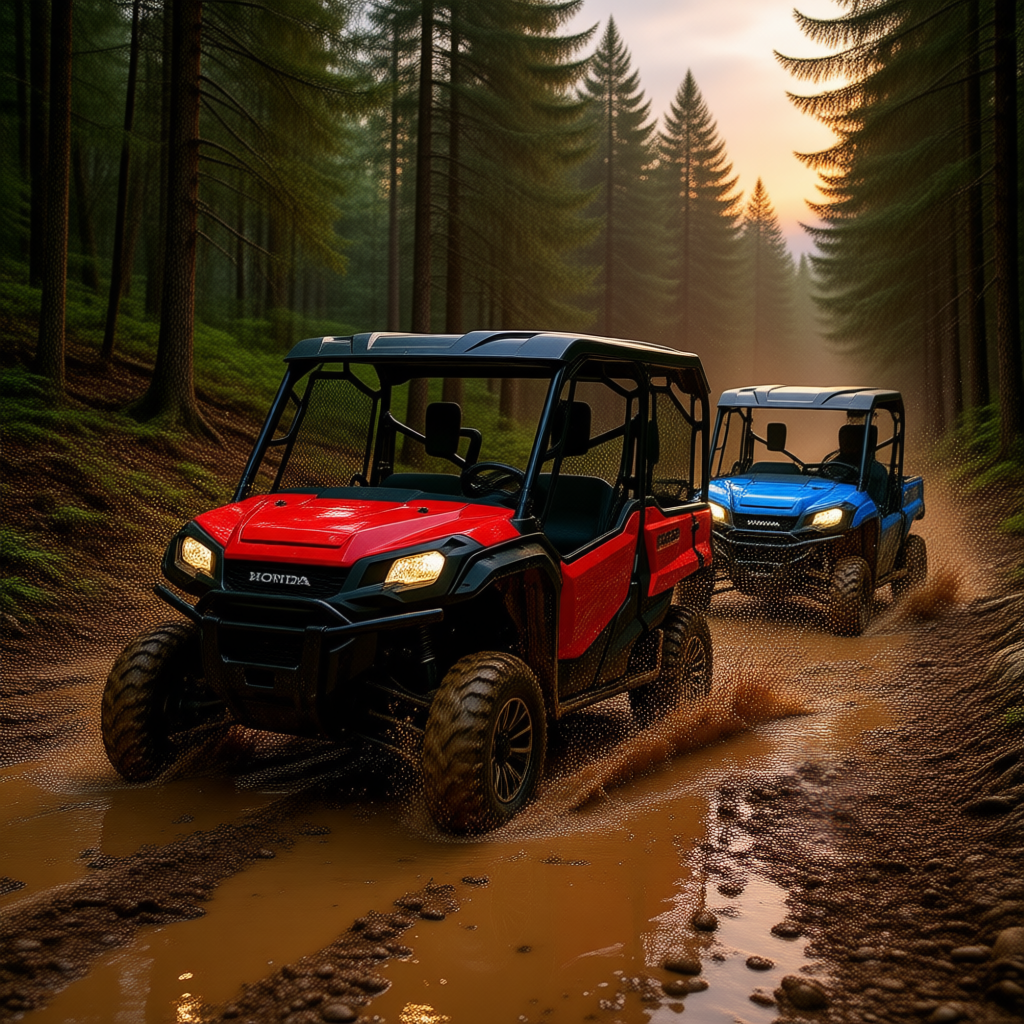
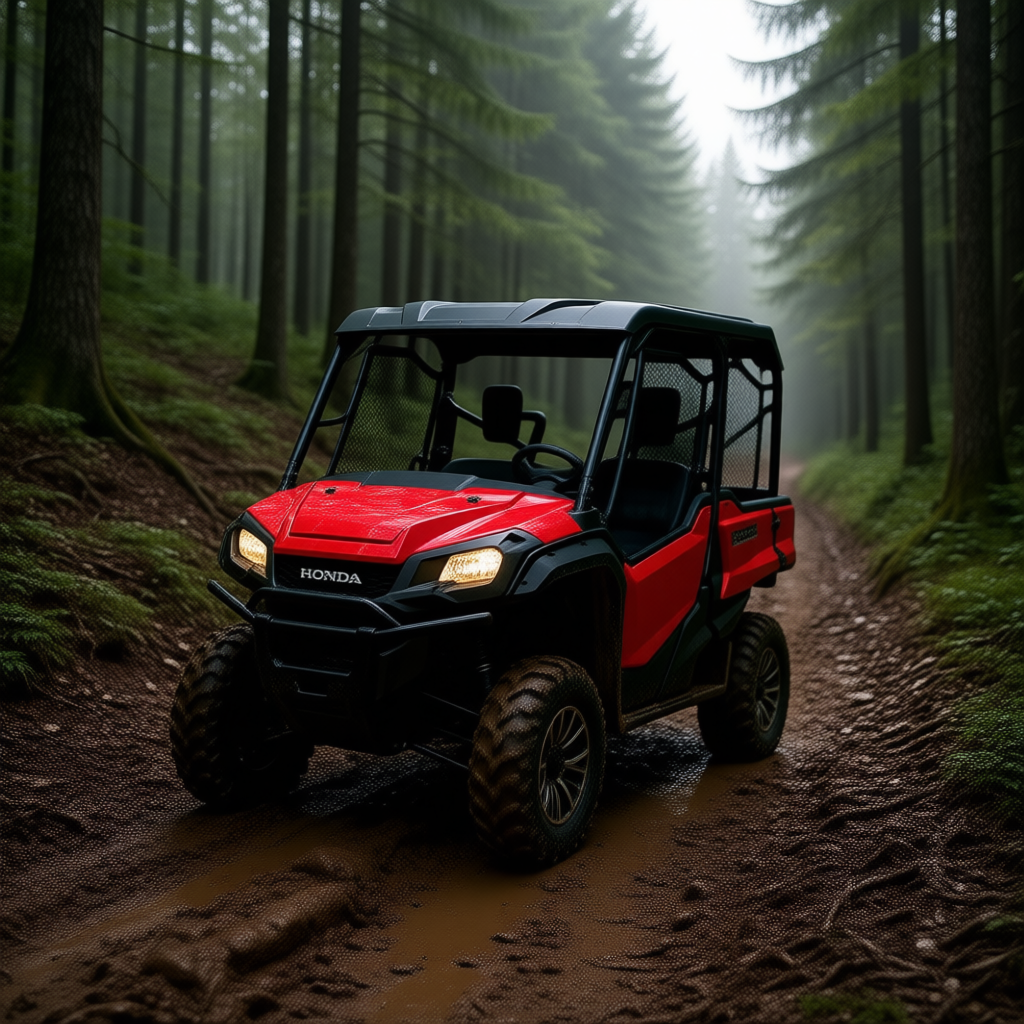
The Honda Pioneer 1000-5 stands as the flagship of Honda’s side-by-side lineup, offering an unmatched combination of power, versatility, and passenger capacity. Powered by a 999cc liquid-cooled twin-cylinder engine producing approximately 104 horsepower, this machine handles everything from technical rock crawling to high-speed desert runs with confidence. The five-seat configuration makes it ideal for family adventures or work crews who need to access remote job sites.
What sets the Pioneer 1000-5 apart in 2026 is Honda’s exclusive Dual-Clutch Transmission (DCT), which eliminates the need for a traditional belt-driven CVT. This automotive-grade transmission delivers seamless gear changes, engine braking on steep descents, and significantly reduced maintenance compared to competitors. The advanced i-4WD system with TraxLok allows drivers to switch between two-wheel drive, four-wheel drive, and a differential-lock mode for maximum traction in challenging conditions.
With 12.4 inches of ground clearance and over 10 inches of suspension travel, the Pioneer 1000-5 absorbs brutal trail obstacles while keeping occupants comfortable. The fully independent suspension features adjustable preload and damping, allowing riders to fine-tune the ride quality based on terrain and load. For those seeking the best Honda UTV accessories, the Pioneer 1000-5 supports an extensive ecosystem of factory and aftermarket upgrades.
Honda Pioneer 700: The Reliable Mid-Size Trail Champion
For riders who prioritize reliability and trail manners over maximum horsepower, the Honda Pioneer 700 remains one of the most respected mid-size side-by-sides on the market. Its 675cc liquid-cooled single-cylinder engine delivers smooth, predictable power that is perfectly suited for technical trail riding where throttle control matters more than raw speed. The automatic transmission with engine braking provides intuitive operation for riders of all skill levels.
The Pioneer 700’s compact dimensions and 850-pound payload capacity make it exceptionally maneuverable on narrow forest trails where larger machines struggle. Honda’s proven shaft-drive system eliminates the maintenance headaches associated with chain-driven competitors, while the fully independent suspension soaks up roots, rocks, and ruts with composure. In 2026, the Pioneer 700 continues to earn top marks for owners who log thousands of trail miles without major mechanical issues.
This machine excels as a hunting companion, farm utility vehicle, and recreational trail rider. Its quiet engine operation, comfortable seating, and excellent visibility make long days in the backcountry enjoyable rather than exhausting. Many experienced off-roaders consider the Pioneer 700 the best Honda off road vehicle for riders who value dependability over flashy performance numbers.
Honda Talon 1000R: The Performance-Focused Sport Side-by-Side
When adrenaline and high-speed desert performance are your priorities, the Honda Talon 1000R delivers an exhilarating experience that rivals dedicated sport UTVs from Polaris and Can-Am. Built on a purpose-built sport chassis with a 999cc parallel-twin engine, the Talon 1000R features Fox 2.5 PODIUM shocks with 17.8 inches of front and 20.1 inches of rear suspension travel, allowing it to devour whoops, jumps, and high-speed chop without bottoming out.
The Talon’s DCT transmission includes a dedicated Sport mode that holds gears longer and delivers aggressive shift mapping for maximum acceleration. Launch control ensures consistent, powerful starts whether you are racing friends or tackling a challenging hill climb. The wide 64-inch stance provides exceptional stability in corners, while the lightweight chassis design keeps the overall weight competitive with pure sport machines.
While the Talon sacrifices some utility capability compared to the Pioneer series, it compensates with pure driving excitement. For enthusiasts who spend most of their time on fast desert trails, dune systems, or sport-oriented riding areas, the Talon 1000R represents Honda’s answer to the question of what the best Honda off road vehicle for performance riding looks like. Learn more about how it compares in our Honda Talon vs Pioneer comparison guide.
Honda Passport TrailSport: The Off-Road Ready SUV
Not every off-road adventure requires a dedicated side-by-side. For families and adventurers who need daily-driver comfort combined with genuine trail capability, the 2026 Honda Passport TrailSport delivers an impressive package. Honda has equipped the TrailSport with all-terrain tires, reinforced underbody skid plates, off-road tuned suspension, and an advanced i-VTM4 all-wheel-drive system with torque vectoring that sends up to 70 percent of torque to the rear wheels and can distribute 100 percent of that rear torque to either left or right wheel.
The Passport TrailSport’s 3.5-liter V6 engine produces 285 horsepower and 262 pound-feet of torque, providing ample power for highway merging and steep trail climbs alike. Ground clearance measures 8.1 inches, which is sufficient for moderate rock crawling, forest service roads, and snow-covered trails. The integrated tow hooks, all-weather floor mats, and orange contrast stitching give the TrailSport a purposeful, adventure-ready aesthetic that stands out in Honda’s SUV lineup.
What makes the Passport TrailSport particularly compelling is its dual-purpose nature. During the week, it serves as a comfortable, fuel-efficient family hauler with advanced safety features and modern infotainment. On weekends, it transforms into a capable overlanding platform that can tow up to 5,000 pounds, carry camping gear for a family of four, and navigate trails that would strand lesser crossovers. For those researching the best Honda off road vehicle that doubles as a daily driver, the Passport TrailSport deserves serious consideration.
Honda Pilot TrailSport: Three-Row Off-Road Capability
For larger families or groups who need three-row seating without sacrificing off-road capability, the Honda Pilot TrailSport extends the TrailSport formula to Honda’s largest SUV. The same i-VTM4 all-wheel-drive system, all-terrain tires, and off-road tuned suspension provide confidence on unpaved roads and moderate trails. The Pilot’s 285-horsepower V6 and 10-speed automatic transmission deliver smooth, responsive power whether you are climbing a forest road or cruising on the interstate.
Check out our off-road collection Amazon products
The Pilot TrailSport’s additional cargo space and passenger capacity make it ideal for group camping trips, trail rides where you need to transport multiple people and their gear, or overlanding expeditions that require extensive supplies. While it cannot match the extreme capability of a dedicated side-by-side, the Pilot TrailSport opens up off-road adventures to families and groups who previously had to choose between passenger capacity and trail access.
Key Features That Make Honda Off-Road Vehicles Stand Out
Honda’s engineering philosophy prioritizes long-term reliability, refined performance, and user-friendly operation. These core values translate into specific features that distinguish Honda off-road vehicles from the competition.
Dual-Clutch Transmission Technology
Honda’s DCT is arguably the most significant technological advantage in the side-by-side segment. Unlike traditional CVT systems that rely on rubber belts and variable pulleys, the DCT uses actual gears and computer-controlled clutches to deliver seamless, efficient power transfer. This results in better fuel economy, more precise engine braking, reduced heat buildup during slow technical crawling, and dramatically lower long-term maintenance costs. In 2026, no other manufacturer has successfully replicated this automotive-grade transmission technology in a production UTV.
i-4WD and i-VTM4 Drivetrain Systems
Honda’s intelligent four-wheel-drive systems go beyond simple torque distribution. The i-4WD system found in Pioneer side-by-sides uses brake-based traction control to simulate differential locks, sending power to wheels with grip while maintaining steering control. The i-VTM4 system in Honda SUVs adds torque vectoring capability, actively overdriving the outside rear wheel during cornering to reduce understeer and improve trail handling precision.
Independent Suspension Engineering
Every Honda off-road vehicle features fully independent front and rear suspension, a design choice that prioritizes ride quality and wheel articulation over the simplicity of solid axles. This approach keeps all four wheels in contact with uneven terrain more consistently, improving traction and reducing the jarring impacts that fatigue riders on long trail days. Honda’s suspension tuning emphasizes compliance over harshness, making their machines favorites among riders who spend entire days exploring backcountry trails.
How to Choose the Right Honda Off-Road Vehicle
Recommended Insights From Our Guide Library:
Selecting the best Honda off road vehicle requires honest assessment of how you will actually use the machine. Consider these critical factors before making your purchase decision.
Terrain and Trail Type Assessment
If your primary riding involves slow, technical rock crawling and narrow forest trails, a compact machine like the Pioneer 700 offers superior maneuverability. For high-speed desert running and dune riding, the Talon 1000R provides the suspension travel and stability needed for aggressive speeds. Mixed-use riders who split time between work tasks and recreational trail riding will find the Pioneer 1000-5 offers the best balance of capability and versatility.
Passenger and Cargo Requirements
Consider how many people typically join your adventures and how much gear you need to transport. Solo riders or couples may prefer the agility of a two-seat machine, while families and groups benefit from the Pioneer 1000-5’s five-seat configuration or the Passport and Pilot SUVs. Cargo bed capacity, towing ratings, and available storage solutions should all factor into your decision.
Budget and Long-Term Ownership Costs
Honda off-road vehicles typically command premium prices compared to some competitors, but they also maintain stronger resale values and incur lower maintenance costs over time. Factor in the total cost of ownership including insurance, registration, routine maintenance, and potential repairs when comparing options. Our Honda Pioneer maintenance guide provides detailed cost breakdowns for long-term ownership planning.
Essential Off-Road Accessories for Your Honda
Maximizing your Honda off-road vehicle’s capability requires strategic accessory investments. Here are the most impactful upgrades for 2026.
Protection and Durability Upgrades
Full-coverage skid plates protect critical drivetrain components from rock damage, while heavy-duty bumpers with integrated winch mounts provide recovery capability and front-end protection. A quality winch rated for at least 1.5 times your vehicle’s gross weight is essential equipment for any serious trail rider. Rock sliders or nerf bars protect vulnerable rocker panels from damage during technical sections.
Lighting and Visibility Enhancements
Factory lighting is adequate for casual trail riding, but serious adventurers benefit from auxiliary LED light bars, ditch lights, and rear-facing chase lights. Modern LED technology delivers dramatically improved illumination while drawing minimal electrical power, extending battery life during long night rides. Roof-mounted light bars provide broad flood illumination for open terrain, while bumper-mounted spotlights penetrate darkness on narrow trails.
Communication and Navigation Systems
Reliable communication becomes critical when venturing beyond cell service range. Modern off-road communication systems like Bluetooth intercoms, CB radios, and satellite communicators keep groups connected and provide emergency contact capability. GPS navigation units designed for off-road use include topographic maps, trail databases, and breadcrumb tracking features that prevent you from getting lost in unfamiliar terrain. Check out our complete off-road accessories guide for detailed product recommendations.
Maintenance Tips for Off-Road Honda Vehicles
Proper maintenance is the foundation of reliable off-road performance. Honda’s engineering excellence reduces but does not eliminate the need for regular service attention.
Post-Ride Inspection and Cleaning Routine
After every trail ride, conduct a thorough visual inspection of your Honda off-road vehicle. Check for loose fasteners, fluid leaks, damaged CV boots, and debris accumulation around brake components and suspension linkages. Pressure washing removes mud and dirt that can accelerate wear on seals, bearings, and electrical connections. Pay particular attention to air filter condition, as dusty trail riding demands more frequent filter service than the standard maintenance schedule suggests.
Fluid Service Intervals and Specifications
Honda’s DCT transmission requires specific fluid types and change intervals that differ from conventional automatic transmissions. Using incorrect fluid or extending service intervals can lead to premature clutch wear and transmission damage. Engine oil, coolant, brake fluid, and differential fluids should all be changed according to the severe service schedule if you regularly ride in dusty, muddy, or high-load conditions. Consult your owner’s manual or visit Honda Powersports official site for exact specifications for your model year.
Suspension and Drivetrain Attention
Off-road riding subjects suspension components to forces far beyond normal automotive use. Regularly inspect shock absorbers for oil leaks, check ball joints and tie rod ends for play, and grease all serviceable fittings after wet or muddy rides. CV joints, driveshaft U-joints, and wheel bearings should be inspected for wear during every major service interval. Catching suspension wear early prevents more expensive repairs and maintains the precise handling that makes Honda off-road vehicles so enjoyable to drive.
Check out our off-road collection Amazon products
Frequently Asked Questions About Honda Off-Road Vehicles
What is the most reliable Honda off-road vehicle?
The Honda Pioneer 700 consistently ranks as one of the most reliable side-by-sides ever produced, with many examples exceeding 10,000 miles with only routine maintenance. The Pioneer 1000 series and Honda SUVs with i-VTM4 all-wheel-drive also demonstrate exceptional long-term durability when properly maintained according to Honda’s service schedules.
Can Honda SUVs handle serious off-road trails?
Honda TrailSport SUVs like the Passport and Pilot are capable of handling moderate off-road trails, forest service roads, and overlanding routes. However, they are not designed for extreme rock crawling or the type of technical terrain that dedicated side-by-sides like the Pioneer and Talon series conquer regularly. Match your vehicle choice to the severity of trails you plan to explore.
How does Honda’s DCT compare to traditional CVT transmissions?
Honda’s Dual-Clutch Transmission offers superior durability, better fuel efficiency, more precise engine braking, and reduced maintenance compared to belt-driven CVT systems. The DCT uses actual gears rather than variable pulleys, eliminating belt failures that plague competitors in demanding conditions. For technical trail riding and long-term ownership satisfaction, the DCT provides clear advantages that justify Honda’s premium pricing.
What maintenance does a Honda Pioneer require after off-road use?
After off-road riding, clean your Pioneer thoroughly, inspect all fasteners and fluid levels, check the air filter, grease suspension and drivetrain fittings, and examine CV boots and brake components for damage. Follow Honda’s severe service maintenance schedule if you ride frequently in dusty or wet conditions, which typically requires more frequent oil changes and filter replacements than the standard schedule recommends. For detailed procedures, reference Offroad.com’s maintenance resources or your specific model’s service manual.
Community Reference & Authority Resources:
Is the Honda Talon suitable for trail riding or only sport riding?
While the Honda Talon 1000R excels at high-speed sport riding, it is also capable on moderate trails thanks to its excellent suspension and ground clearance. However, its wider stance, longer wheelbase, and sport-tuned suspension make it less ideal for extremely narrow or technical trails compared to the more compact Pioneer series. Many owners successfully use the Talon for mixed sport and trail riding, but pure trail riders often prefer the Pioneer’s more trail-focused dimensions and utility features. Explore more trail recommendations at TrailTech’s off-road trail database.
🔍 Explore More: See all guides for Honda Pioneer.