
When it comes to 2 up atv vs side by side safety, getting the right details matters. If you have ever tried to navigate a steep, rutted washout with a passenger clinging to your waist on a quad, you know the feeling. That subtle shift in weight that makes the front end feel light? That is the physics of a 2-up ATV working against you.
For Honda Pioneer enthusiasts, the switch from a traditional four-wheeler to a Side-by-Side (SXS) often comes down to one non-negotiable factor: the safety of the person sitting next to you.
Before we dive into the hard data, if you are gearing up for the 2026 season, here are three essential safety upgrades available on Amazon that we recommend for every Pioneer owner:
1. Universal UTV Grab Handles (Crucial for passenger stability in rough terrain)
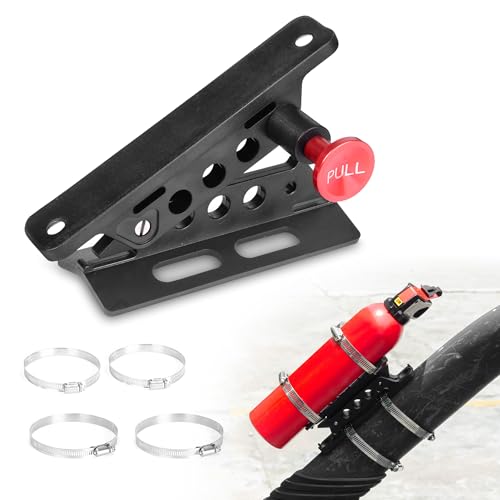
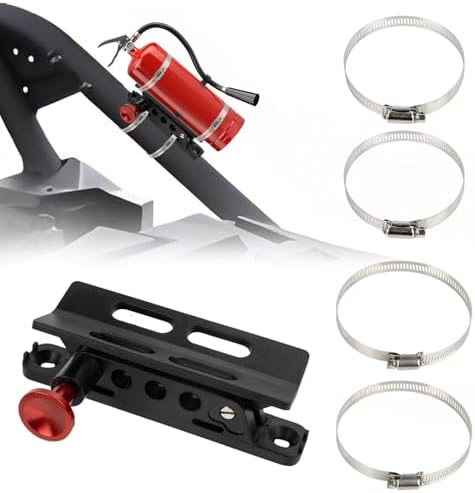
2. Kemimoto Roll Bar Fire Extinguisher Mount (A non-negotiable safety add-on)
3. 4-Point Safety Harness Kits (Upgrade from stock belts for maximum containment)
The Core Physics: Why “Saddle” Riding Carries Higher Risk
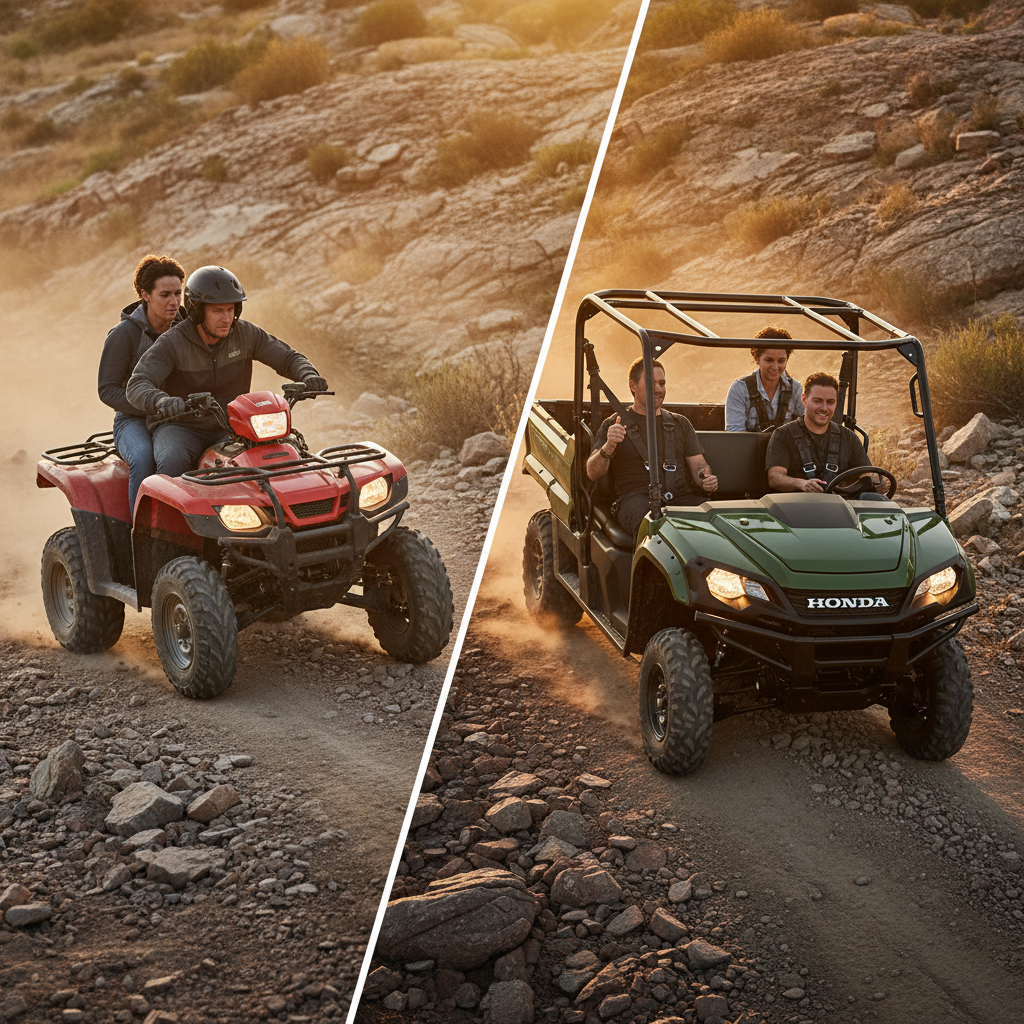
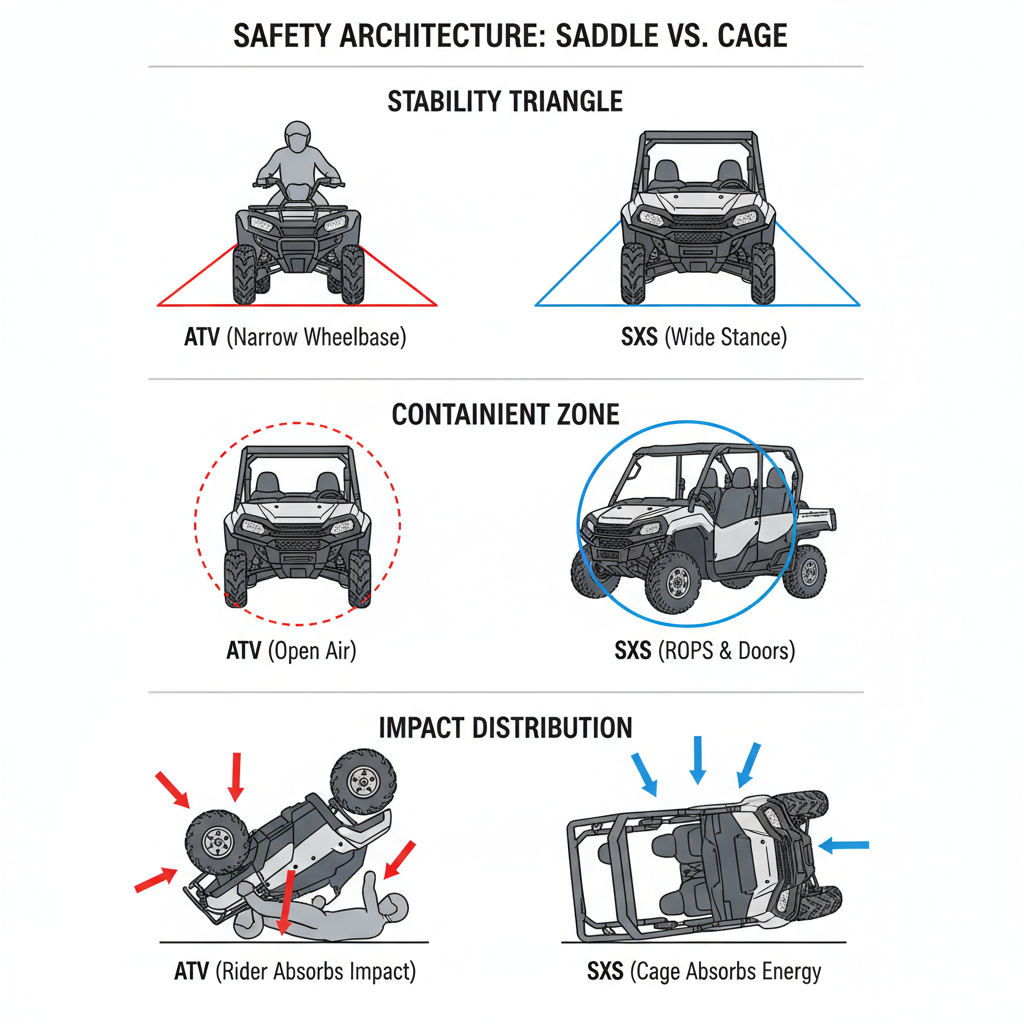
The fundamental difference in 2 up atv vs side by side safety isn’t just about having a metal cage; it is about the center of gravity. When you add a passenger to an ATV, you are adding 150-200 pounds of weight at the highest point of the vehicle. This drastically raises the center of gravity, making the machine significantly more prone to tipping during off-camber maneuvers.
In contrast, a Honda Pioneer seats passengers lower in the chassis. The engine and drivetrain are positioned to keep mass centralized and low. This low center of gravity combined with a wider wheelbase creates a “stability box” that is far more forgiving of driver error than any ATV.
https://www.youtube.com/watch?v=Jz5iU8o-7AB
Furthermore, operating an ATV requires “active riding.” The operator and the passenger must shift their weight in unison to counterbalance the machine on turns or slopes. If your passenger is inexperienced, tired, or simply distracted, they become “dead weight” that can destabilize the vehicle in a split second.
Containment vs. Ejection: The CPSC Statistics
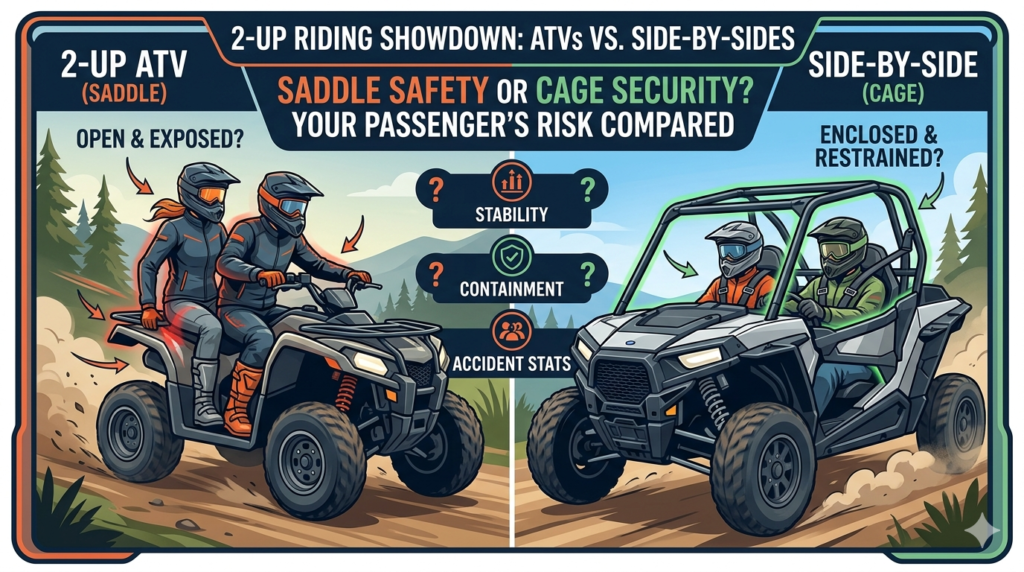
The most sobering data regarding off-road safety comes from consumer safety reports. According to recent CPSC data, the vast majority of ATV fatalities result from rollovers where the rider is pinned or ejected. On a quad, *you* are the roll bar.
Check out our off-road collection Amazon products
In a Side-by-Side, the safety philosophy is “containment.” The Roll Over Protection Structure (ROPS), combined with 3-point or 5-point harnesses and side nets/doors, is designed to keep occupants *inside* the protective volume of the vehicle during a crash.
The Consumer Product Safety Commission (CPSC) data consistently shows that while UTV accidents do happen, the lethality rate per accident is lower compared to ATVs, primarily because occupants remain protected by the cage rather than being thrown against rocks or trees.
“On a quad, the rider protects the machine. In a Pioneer, the machine protects the rider.”
| Feature | 2-Up ATV | Honda Pioneer (SXS) |
|---|---|---|
| Passenger Stability | Requires active weight shifting | Passive (seated securely) |
| Rollover Protection | None (Rider is exposed) | ROPS (Roll Cage) + Seatbelts |
| Braking Stability | Prone to nose-dive with passenger weight | 4-wheel hydraulic discs, stable platform |
| Fatigue Factor | High (Physical riding required) | Low (Automotive style ergonomics) |
The Skill Gap: Steering Wheel vs. Handlebars
There is a reason why utility workforces are moving rapidly toward UTV fleets. The learning curve for a steering wheel is practically zero for anyone with a driver’s license. Handlebars, thumb throttles, and independent front/rear brake levers on an ATV require muscle memory that takes time to build.
In a panic situation—like sliding on loose gravel toward a drop-off—an instinctive reaction for a car driver might be to slam the brakes and steer away. On a UTV, this generally works. On an ATV, slamming the front brake while turning on gravel is a recipe for a high-side rollover.
https://www.youtube.com/watch?v=A1ybyjxK_3y
For 2026, many Honda Pioneer models feature i-4WD, an intelligent traction control system that manages wheel slip automatically, allowing the driver to focus solely on steering rather than managing differential locks. This technology further widens the safety gap between modern SXS and traditional ATVs.
Passenger Comfort = Passenger Safety
We often overlook fatigue as a safety risk. A passenger on a 2-up ATV must hold on tight, absorb bumps with their legs, and constantly watch the terrain to anticipate body movements. After two hours, physical exhaustion sets in.
A physically exhausted passenger has slower reaction times and a weaker grip. In a Pioneer, your passenger is sitting in a contoured bucket seat, bracing against a floorboard and holding a grab bar, protected from the elements by a windshield and roof. They can ride for 6 hours and remain alert, whereas an ATV passenger is often physically spent.
- Impact Protection: Pioneer doors prevent leg injuries from passing brush and rocks, a common injury on ATVs.
- Weather Fatigue: A roof and windshield reduce exposure to sun and rain, keeping the driver and passenger sharper.
- Communication: It is easier to hear warnings or instructions when sitting side-by-side than screaming at the back of a helmet.
https://www.youtube.com/watch?v=0kDyOgBSQQT
Final Verdict: The Pioneer Advantage
While 2-up ATVs have their place in tight, technical trails where width is a restriction, the data regarding 2 up atv vs side by side safety is clear. For recreational riding with family, friends, or a spouse, the containment, stability, and ease of use provided by a Side-by-Side offer a superior safety margin.
Check out our off-road collection Amazon products
Honda’s commitment to safety, seen in their DCT transmissions (which provide consistent engine braking compared to freewheeling CVTs) and robust ROPS testing, makes the Pioneer platform a top choice for those who value arriving home safely as much as they value the adventure itself.
“The best safety feature is a vehicle that forgives your mistakes.”
If you are ready to upgrade your ride or just want to make your current Pioneer safer, checking your maintenance and ensuring your safety gear is up to date is step one. Stay safe on the trails, and keep the rubber side down.
For more official safety information, visit these resources:
Honda Powersports Official Pioneer Lineup
CPSC ATV & UTV Safety Information Center
Specialty Vehicle Institute of America (SVIA)
Recreational Off-Highway Vehicle Association (ROHVA)
🔍 Explore More: See all Wild Testing guides for 2 up atv vs side by side safety.
Check out our off-road collection Amazon products

- WIDE COMPATIBILITY FOR POLARIS RANGER ACCESSORIES: This UTV grab handle fits 2014-2025 Polaris Ranger 570, 900, 1000 XP/…
- SECURE GRAB POINT FOR EASY ENTRY & EXIT: Add a sturdy UTV grab handle to your Polaris Ranger cab frame, making it simple…
- DURABLE ABS PLASTIC CONSTRUCTION: Crafted from high-quality ABS plastic with rounded edges for a comfortable, safe grip …

- What you need is a safe grab handle enabling you easy assistance in and out of the vehicle, or holding yourself in place…
- Made of high-quality nylon webbing. Ergonomic Handholds Look Great, Work Well & Fit Comfortably in Your Hand
- Simple to install no need to cut the padding. The 3 hook and loop fasteners and loop straps wrap and fasten over a unive…

- ROLL BAR GRAB HANDLES UTV (4-UNIT PACK): Stability in every turn with our roll bar grab handles UTV provides a convenien…
- ENHANCED STABILITY AND COMFORT: Our UTV grab handles offer a non-slip, weather-resistant grip for convenience in all con…
- PEACE OF MIND FOR EVERY RIDE: Designed for durability, our grab handle SxS are built with upgraded stainless steel buckl…